

That gnawing feeling in your chest when you can’t pinpoint what’s wrong. The constant mental loop of worst-case scenarios about your baby’s health, your partner’s safety, your own ability to cope. If worry has become your default setting rather than an occasional visitor, you might be experiencing generalized anxiety disorder.
GAD isn’t the normal nervousness that comes with caring for a tiny human. It’s a persistent, excessive anxiety that shows up uninvited and overstays its welcome, often for six months or longer. While many new parents naturally worry about their children’s wellbeing, GAD takes those concerns and amplifies them until they interfere with daily life. You might find yourself unable to enjoy precious moments because your mind is already racing to the next potential crisis, or lying awake replaying conversations from days ago, searching for hidden threats.
This condition affects roughly 6.8 million adults in North America, and parents are particularly vulnerable during the perinatal period. The overlap between typical new-parent stress and GAD symptoms can make understanding postpartum mental health challenges especially important. Recognizing the difference between appropriate caution and an anxiety disorder that needs professional support is the first step toward feeling like yourself again.
You’re not imagining it, and you’re certainly not alone. Let’s explore what GAD really looks like and how to know when it’s time to reach out for help.
Defining Generalized Anxiety Disorder: More Than Just Everyday Worries
Generalized anxiety disorder is a mental health condition where you experience excessive worry about everyday situations paired with a constant feeling of being overwhelmed. Unlike the brief stress you might feel before a big presentation or the natural nervousness that comes with caring for a newborn, GAD involves persistent anxiety that shows up more days than not.
Here’s what makes it distinct: the worry isn’t tied to a single event or challenge. With GAD, your mind cycles through various concerns throughout the day, your baby’s health, your partner’s safety on the commute, household finances, whether you’re doing enough as a parent. Each worry feels urgent and difficult to quiet, even when logically you know your fears are disproportionate to the actual situation.
This isn’t about being a cautious or thoughtful parent. GAD creates a fear response that feels hard to manage and interferes with your daily activities at home, work, or in caring for your child. You might find yourself checking on your sleeping baby repeatedly, unable to focus during conversations, or feeling physically exhausted from the mental effort of worrying.
The key difference between typical parental concerns and GAD lies in how the worry behaves. Every parent wonders if they’re making the right choices or worries when their child seems off. That’s normal and even protective. But when anxiety becomes excessive, happens most days, and prevents you from being present in your life, it has crossed into something more.
GAD isn’t a personal failing or a sign you’re not cut out for parenthood. It’s a recognized mental health condition that affects how your brain processes everyday concerns, turning manageable thoughts into overwhelming fears that demand constant attention.
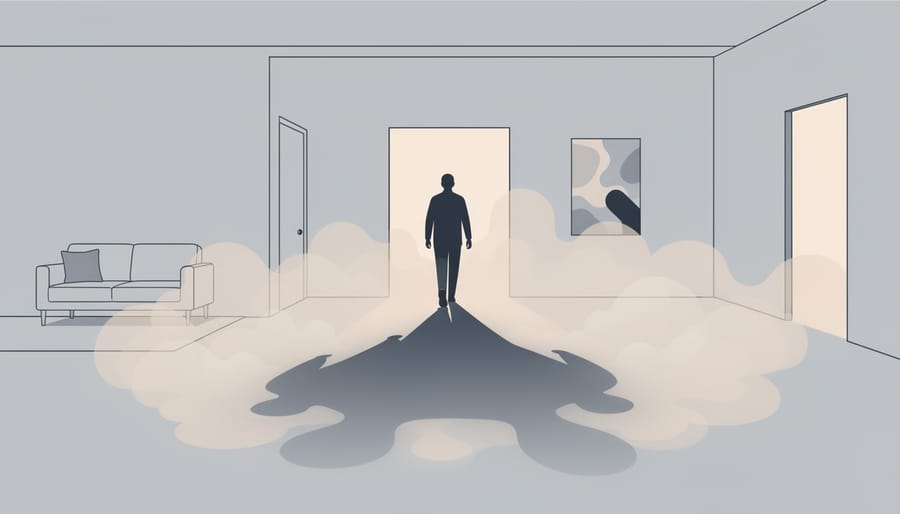
How GAD Shows Up in Your Daily Life
GAD has a way of weaving itself into the fabric of your daily routine, turning ordinary moments into sources of persistent unease. For new and expecting parents riding the rollercoaster of parenthood this can feel particularly overwhelming because so much already feels new and uncertain.
When GAD is present, everyday parenting tasks become harder than they should be. You might find yourself checking on your sleeping baby repeatedly, not just once or twice, but so many times that you barely sleep yourself. Planning a simple outing to the grocery store becomes an exhausting mental exercise as you run through every possible scenario that could go wrong. At work, concentrating on a task becomes nearly impossible because worry about your child’s daycare experience keeps pulling your attention away.
The interference happens across different parts of your life:
- Struggling to make decisions about routine matters like what to feed your baby or which stroller to buy, spending hours researching and second-guessing every choice
- Avoiding social situations or parent groups because the anticipatory anxiety feels too intense
- Physical tension and restlessness that makes it hard to relax even when your baby is peacefully napping
- Difficulty being present during precious moments with your child because your mind is racing ahead to future worries
- Exhaustion from the mental load of constant worry that feels disproportionate to the actual situation
What sets GAD apart from the expected adjustment anxiety of new parenthood is how it persists and intensifies rather than gradually easing as you find your rhythm. While most new parents worry and feel uncertain, GAD interferes with your ability to function and find joy in parenting. The worry occurs more days than not and feels excessive compared to the actual likelihood or impact of the feared event.
You might notice that reassurance from your partner, healthcare provider, or other parents provides only temporary relief before the worry cycle begins again. This constant feeling of being overwhelmed can make you question your capability as a parent, even when objectively you are doing everything right.

Who Experiences GAD? You’re Not Alone
You’re far from alone in this. Research from 2012 found that approximately 2.4 million Canadians aged 15 and older, about 8.7% of the population, reported symptoms consistent with generalized anxiety disorder. That’s roughly one in eleven people, which means in any room, at any parent group, or on any playground, there are others who understand the weight of constant worry.
While these numbers give us a snapshot, the reality is that many people experiencing GAD never seek help or receive a formal diagnosis, so actual numbers may be higher. What matters most is recognizing that what you’re feeling isn’t a personal failing or something only you struggle with.
For new and expecting parents specifically, anxiety disorders are particularly common. The transition to parenthood brings legitimate concerns about your baby’s health, your ability to care for them, finances, and countless daily decisions. When these worries become excessive and occur more days than not, affecting your ability to function in everyday life, it may be GAD rather than typical adjustment anxiety.
Understanding that millions of others share this experience can be deeply reassuring. It reminds us that GAD is a recognized condition, not a character flaw. Many parents who felt overwhelmed by persistent worry have found support, developed coping strategies, and regained a sense of peace in their daily lives.
You’re part of a larger community navigating similar challenges. Seeking information, as you’re doing now, is a meaningful step toward understanding your experience and finding the support that can help.
What Makes GAD Different from Normal Parenting Anxiety
Every new parent worries. You question whether your baby is sleeping enough, eating enough, hitting milestones on time. You wonder if you’re doing it right. This is completely normal and expected when you’re caring for a tiny human who depends on you entirely.
GAD operates differently. While typical parenting anxiety focuses on specific concerns and eases when you get reassurance or solve the problem, GAD brings persistent worry that doesn’t let up. The anxiety occurs more days than not and feels excessive compared to the actual situation. A typical worry might be, “I hope the pediatrician says the baby is gaining enough weight.” With GAD, that same concern spirals into constant, overwhelming thoughts about your child’s health, your competence as a parent, financial security, and a dozen other scenarios, even when everything is going well.
The key difference lies in three areas: how often the worry happens, how intense it feels, and whether it stops you from functioning. New parent anxiety usually comes in waves, often tied to specific triggers like an upcoming doctor’s appointment or a rough night of sleep. GAD anxiety is there most days, regardless of what’s happening. It feels disproportionate to the situation and hard to control, even when you logically know you’re overthinking.
| Aspect | Typical Parenting Anxiety | GAD |
|---|---|---|
| Frequency | Comes and goes with specific triggers | Present more days than not |
| Intensity | Proportionate to the concern | Excessive and hard to control |
| Impact | Manageable, doesn’t stop daily activities | Interferes with home, work, or relationships |
| Relief | Eases with reassurance or problem-solving | Persists despite reassurance |
The impact piece matters most. Regular parenting anxiety might make you check on your sleeping baby a few times, but you can still rest and function the next day. GAD interferes with your ability to complete daily tasks, enjoy moments with your baby, maintain relationships, or show up at work. You might find yourself constantly seeking reassurance, avoiding situations that trigger worry, or feeling physically exhausted from the mental load.
If your worry feels relentless, stops you from being present with your family, or makes everyday tasks feel impossible, that’s worth exploring with a professional. You deserve support that goes beyond well-meaning advice to actually address what you’re experiencing.
When to Seek Professional Support
If you’ve been reading about GAD and recognizing yourself in these descriptions, you might be wondering whether it’s time to reach out for professional help. Here’s the truth: recognizing that you need support is a sign of strength, not weakness. As parents, we’re conditioned to put everyone else first, but your mental health matters just as much as your baby’s wellness checks.
Consider reaching out to a mental health professional if your worry is interfering with your daily life in ways that feel unmanageable. Maybe you’re struggling to sleep even when your baby is sleeping, finding it hard to bond with your child because anxiety keeps pulling your attention away, or avoiding activities you once enjoyed because the worry feels too overwhelming. When anxiety starts dictating your choices and limiting your life, that’s a clear signal to seek therapeutic support.
You don’t need to wait until you’re in crisis to ask for help. In fact, addressing GAD earlier often leads to better outcomes. A mental health professional can provide an accurate diagnosis and work with you to develop a plan that fits your life as a parent. Understanding how therapy helps can make the decision to reach out feel less daunting.
Your family doctor, a psychologist, or a counselor who specializes in perinatal mental health can be excellent starting points. Many parents find relief in simply talking to someone who understands what they’re experiencing and can offer practical strategies tailored to their situation. You deserve to parent without the constant weight of excessive worry, and support is available to help you get there.

Seeking information about GAD is already an important step toward understanding what you’re experiencing. If the persistent worry and overwhelm described in this article resonated with you, know that you’re not alone in this journey. With proper support, GAD is manageable, and countless parents have found relief through professional guidance.
Reaching out to a mental health professional isn’t admitting defeat. It’s choosing to prioritize your wellbeing so you can show up more fully for yourself and your family. A qualified therapist or doctor can help you understand whether what you’re experiencing is GAD and work with you to create a path forward that feels right for you.
Our community is built on the belief that parental mental health matters deeply, not just for you but for everyone in your family. You deserve support that meets you where you are, without judgment. Whether you’re navigating new parenthood, expecting, or simply trying to understand these feelings, you don’t have to carry this weight alone. Help is available, healing is possible, and hope is real.